Quote

Faith is to believe what we do not see, and the reward of this faith is to see what we believe. — St. Augustine

Jesus, Our Singing Savior

Two Auca Indians sang a haunting chant of worship to God before a great missionary congress in Berlin. One of the singers had driven his spear into the bodies of the missionary martyrs who had landed in the Ecuadorian jungle

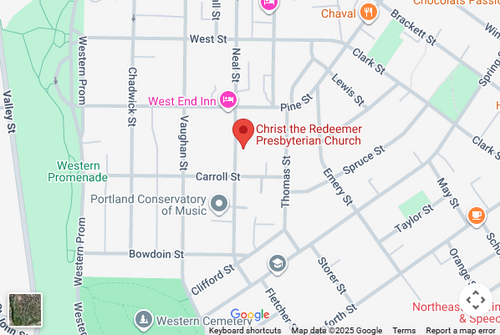
Worship: 10:30am Sundays
at Breakwater School
more info…

Priorities for Prayer

The Elders consider prayer one of the primary and most important disciplines of the Christian life and of our life together as we celebrate and extend God’s grace.  Yet nothing in the Christian life is more difficult  than regular, earnest prayer. The world, the flesh and the devil are all lined up against the discipline of prayer and they draw us away from this most precious and necessary means of grace.  In order to assist ourselves and the congregation in maturity in prayer, we offer the following goal for prayer, a statement of how we might assess the progress toward the goal and a current list of priorities for moving the congregation toward this goal.     ( Revised April 30, 2010)


Our goal for prayer

That members are having regular private, family and corporate prayer that is increasingly valued as being essential to all of life and practiced as an expression of our faith in Christ.


How we know the goal is being achieved

The bolded and italicized words are important ones related to behavior and attitude to which the elders can direct their efforts.

By regular is meant having daily private prayer, 4-7 times per week participating in family prayer and twice per week participating in corporate prayer. This is meant only as a guide to convey what is meant by regular. There will be seasons of more frequent prayer and even of less frequent prayer for various circumstantial and spiritual reasons.

Increasingly valued means that people believe in the value of all three occasions for prayer and are practicing them. People are making an effort to get to small groups in part because that is where corporate prayer is taking place. Family worship is being practiced, includes a time of prayer, and the practice is being passed on to the next generation. Couples are prioritizing their activities so that they have time to pray together. Elders are receiving phone calls with requests for prayer or members are writing down prayer requests on Sunday and putting them in the offering plate. Sunday School classes on the topic of prayer are well attended. Prayer is known to be valued when members are offering praise for answered prayer. These kinds of things are things to look for when trying to evaluate how the Congregation values prayer.

Prayer is an expression of our faith in Christ when we run into his presence boldly because Christ has granted us access calling on the Lord in faith – praising him for his faithfulness, adoring him for his beauty, crying out to him with our needs, interceding for our neighbors, and confessing our sins. People are eager to pray with and for each other. There is a gospel theme to the requests and praises that are brought for prayer. As the elders pray with and for the people, they are seeing and hearing a trust in God grounded in the promises of Scripture. Prayer is not approached as another good work on the Christian checklist or just a laundry list of needs, wants, and desires but rather a loving conversation with a heavenly Father.


How we are moving the congregation towards this goal

In our personal/Sessional life

  • Gathering together to pray for ourselves and our people.
  • Develop deeper intimacy/transparency amongst ourselves.
  • Praying for our prayer lives and the prayer of our people.
  • Being intentional in our praying for all the business that comes before us.

In the Corporate Worship Service

  • Have the elders lead the prayer time.
  • Intentional use of Scripture in prayer.
  • Utilize a variety of ways to pray – litanies, taking requests, pastoral prayer, etc.
  • Having multiple times of prayer
  • Involving the entire person in worship – lifting hands in prayer, falling on our knees, standing before the throne of grace, etc.
  • Responding to special needs for prayer through special times of prayer with laying on of hands.
  • Teaching and preaching in the worship regarding prayer – both informally as introductions to our prayers and from the “pulpit” (that is, sermons).

In our shepherding

  • Continue to have elders contact those on their shepherding lists to ask for prayer requests.
  • Modeling prayer as we pray with our people as we share life with them.
  • Praying for the spiritual vitality of our people – and encouraging our people to pray this way.

Prayer Meetings

  • Continue to highlight the times of corporate prayer and invite people to come.
  • Create multiple times, places, and formats to invite and encourage more to be involved.
  • Quarterly concerts of prayer including teaching on prayer.

Discipleship

  • Making prayer a higher priority amd more intentional in the life of the home fellowship groups.
  • Communicating the vision using multiple avenues, such as the Beacon, Taking Gathered Worship Home, and over avenues.

Family & Children

  • Using the Children’s Page to instruct our children on prayer.

Approved by the Session, 05 June 07

Reviewed by the Session April 27, 2010


print this page