Quote

In the Christ-life nothing, nothing at all, can be purchased at the do-it-yourself shop. — Harry Blamires The Tyranny of Time

Jesus, Our Singing Savior

Two Auca Indians sang a haunting chant of worship to God before a great missionary congress in Berlin. One of the singers had driven his spear into the bodies of the missionary martyrs who had landed in the Ecuadorian jungle

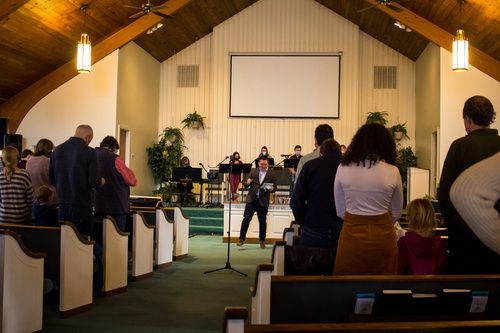
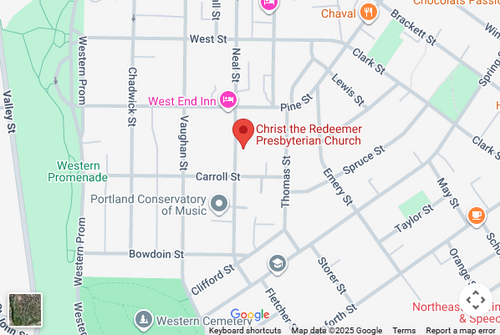
Worship: 10:30am Sundays
at Breakwater School
more info…

What is Advent?

The season leading up to Christmas in the Church calendar is called Advent. This name has come to us through the Latin advenire meaning “coming” or “arrival,” referring to the coming or arrival of Jesus who is the “Christ” or promised Messiah. Within the church, a three-fold meaning has been derived from this term:

  1. the advent of our Lord in the flesh at Christmas;
  2. the advent of our Lord in the Word and Spirit through the Church; and
  3. the advent of our Lord when He returns in glory to judge all men and nations.

If there is one theme that runs throughout all three it is simultaneous joy and anticipation. The joyful recognition of what God has accomplished together with the anticipation of how He will yet fulfill His promises to the church in His return.

Observing Advent in the liturgical year helps mark sacred time. It becomes a safeguard against falling into the trappings of Christmas as celebrated by “the world.” Christ coming into our world has changed all of history. It also now directs all of history towards His Second Coming. We live in the “in between” time of wilderness wanderings with hope and expectant faith for His return. In this time of waiting, there is great joy as well as serious longing and heartache; much like couples experience in the period of engagement.

We are exhorted to live bittersweet lives in this season, glad-hearted for Christ’s coming, but ever mindful that He returns as Judge over all men and nations. These two strains were present at the institution of Advent and are continued more than a thousand years later. They help us to remind ourselves and one another of God’s promises and their fulfillment in the birth of our Savior. By celebrating and worshipping together we experience the richness of the symbols, traditions and music that prepare our hearts for the coming Christ.

It is important to note that there is no evidence in either the apostolic era or more significantly the New Testament itself in regard to annual observance of Christ’s birth or any other event in the ministry of Jesus. In fact, other than the weekly observance of Sunday, the New Testament seems to show an ambivalence toward annual festivals as can be seen in Paul’s statement to the Galatians regarding his concern at their observance of “special days and months and seasons” (Gal. 4:10). Despite this concern (which could also easily be interpreted as Paul’s distress at their maintaining the Jewish calendar laid out in the Pentateuch), the yearly observance of Easter, Christmas and other events from Jesus’ earthly ministry begin to appear early in the church’s history starting in the second century.

The origins of Christmastide and Advent are best understood as a development of the church’s annual observance of the death and resurrection of Jesus. The passion of Jesus in the gospel accounts is linked directly with the Jewish observance of Passover. While the apostolic church translated the annual Jewish observance of Passover to the weekly commemoration of Christ’s resurrection on Sunday, the early church began an annual observance of Christ’s atoning death and resurrection by the mid-second century. By the
third century, the Western Church had linked Christ’s passion with March 25th, the beginning of the spring equinox.1 As the theology of the Early Church began to crystallize the differing aspects of their doctrine of Christ (i.e. the Incarnation, Death, Resurrection, Ascension, sending of the Spirit) the framework of the Christian calendar began to grow from the initial feast of the Resurrection.

While it is commonly believed that the dating of Christ’s birth was an attempt to co-opt a previously existing Roman pagan holiday on December 25th, this does not appear to be the case at all. In fact, the computation of Christ’s birth was determined by the early church based on two factors. First of all, the Early Church surmised the time of Christ’s conception from that of John the Baptist in Luke’s account which details the temple activities of John’s father, Zechariah, that connect with the Jewish month of Tishri (our September/October). Given Gabriel’s appearance to Mary was in the sixth month of Elizabeth’s pregnancy of John (Luke 1:36), the conception of Jesus would then follow six months later at the Spring Equinox and the nativity nine months later at the Winter Solitice.

Secondly, this computation from the book of Luke was supported by a Jewish tradition at the time of Early Church that taught that birth and death of the Patriarchs occurred on the same day. However, the Early Church modified this Jewish approach by combining the date of Christ’s conception with that of his death. Consequently, once March 25th was in place as the observation of Christ’s passion (and conception) the Early Church merely added nine months resulting in December 25th.

Just as the annual feast of Christmas grew out of the feast of Christ’s passion, so too the Advent season began as a season of preparation in parallel to the earlier developed season of Lent, which was promulgated at the Council of Nicaea in 325AD. 2 The Advent season was recognized in 567 at the Council of Tours as a time of fasting preceding Christmas Day. At the same council they proclaimed the 12 days from Christmas to Epiphany as a sacred season which we now call Christmastide.

Within the liturgical calendar, Advent marks the beginning of the church year. The first Sunday in Advent is the one occurring nearest, or on, November 30. While always including four Sundays, the season may vary in length from 22-28 days, concluding on Christmas Eve.

Often we fail to distinguish between the two seasons of Advent and Christmas. Advent is a preparatory time of four Sundays prior to Christmas. Historically its themes have been anticipation of the coming of Christ, penitence, fasting and joy.

Christmastide is the season that begins with the birth of Christ in Bethlehem. The events associated with it occur during and after, not prior to as in Advent. The Christmas season is culminated twelve days later in Epiphany, or the celebration of Christ’s first appearance to the Gentiles as He was worshipped by the Wise Men. The season is still one of anticipation, for we await His return to earth in glory at His Second Coming. It is, however, a season characterized mainly by the joy of His arrival. Still present, though, is the more somber note of the prospect of His return as Judge over all men and nations.

The observance of Advent and Christmastide can be noting more than meaningless tradition or it can be a rich spiritual discipline bearing much fruit in you and your family. The point is adoration of Christ. We are called to do that individually, as families, and as a community of faith. Let us look to Christ who has appeared and revealed the fullness of God. Let us praise Him with our lips. Let us sing to Him the songs of worship which He alone deserves. As we do may He by His grace and in the power of the Holy Spirit transform us more and more into His image and may we live as the co-heirs to Christ His appearing has made us to become.

1 This was a departure from the Jewish dating of Passover which is based on a lunar, not a solar calendar. While many Puritan writers decry the linking of annual festivals with the change of seasons as a form of paga nism it is important to note that all three of the annual Jewish festivals in the Pentatuch (first five books in the Bible) have direct connections to the change of seasons. This is a natural outflow of God’s covenantal relationship established at creatio n and maintained in the doctrine of God’s sovereignty. The
dating of Easter became a significant controversy in the early church referred to as the “Quartodeciman Controversy.”

2 James F. White, Christian Worship. Revised Edition. Nashville: Abingdon Press, 1990, p. 61

print this page