<?xml version="1.0" encoding="UTF-8"?>
<rss version="2.0"
	xmlns:content="http://purl.org/rss/1.0/modules/content/"
	xmlns:wfw="http://wellformedweb.org/CommentAPI/"
	xmlns:dc="http://purl.org/dc/elements/1.1/"
	xmlns:atom="http://www.w3.org/2005/Atom"
	xmlns:sy="http://purl.org/rss/1.0/modules/syndication/"
	xmlns:slash="http://purl.org/rss/1.0/modules/slash/"
	>

<channel>
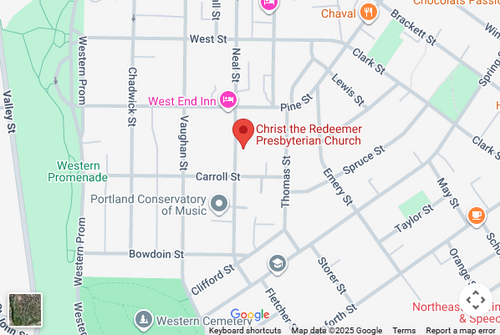
	<title>Christ the Redeemer Presbyterian Church</title>
	<atom:link href="http://www.ctrportland.org/?feed=rss2" rel="self" type="application/rss+xml" />
	<link>http://www.ctrportland.org</link>
	<description></description>
	<lastBuildDate>Sun, 22 Aug 2010 10:31:01 +0000</lastBuildDate>
	<generator>http://wordpress.org/?v=2.9.2</generator>
	<language>en</language>
	<sy:updatePeriod>hourly</sy:updatePeriod>
	<sy:updateFrequency>1</sy:updateFrequency>
			<item>
		<title>Sunday School</title>
		<link>http://www.ctrportland.org/?p=219</link>
		<comments>http://www.ctrportland.org/?p=219#comments</comments>
		<pubDate>Sun, 22 Aug 2010 10:20:04 +0000</pubDate>
		<dc:creator>Dana Perkins</dc:creator>
				<category><![CDATA[news]]></category>

		<guid isPermaLink="false">http://www.ctrportland.org/?p=219</guid>
		<description><![CDATA[Sunday School for all ages will resume on September 12th. Make plans now to be in study together
here at Christ the Redeemer. Please note that we will not have Sunday School the following Sunday
September 19th due to the church retreat.
]]></description>
			<content:encoded><![CDATA[<p>Sunday School for all ages will resume on September 12th. Make plans now to be in study together<br />
here at Christ the Redeemer. Please note that we will not have Sunday School the following Sunday<br />
September 19th due to the church retreat.</p>
]]></content:encoded>
			<wfw:commentRss>http://www.ctrportland.org/?feed=rss2&amp;p=219</wfw:commentRss>
		<slash:comments>0</slash:comments>
		</item>
		<item>
		<title>Let Us Love and Sing and Wonder</title>
		<link>http://www.ctrportland.org/?p=215</link>
		<comments>http://www.ctrportland.org/?p=215#comments</comments>
		<pubDate>Tue, 17 Aug 2010 19:05:22 +0000</pubDate>
		<dc:creator>DavidStew</dc:creator>
				<category><![CDATA[articles]]></category>

		<guid isPermaLink="false">http://www.ctrportland.org/?p=215</guid>
		<description><![CDATA[Let Us Love and Sing and Wonder: The Proper Response to the Gospel
Selected Scriptures
Do you ever notice the tiny little font that runs across the top of our  worship songs?  That’s the place where we put author and credit  information.  It’s purposefully small so as not to detract from the  [...]]]></description>
			<content:encoded><![CDATA[<h4>Let Us Love and Sing and Wonder: The Proper Response to the Gospel</h4>
<p><em>Selected Scriptures</em><br />
Do you ever notice the tiny little font that runs across the top of our  worship songs?  That’s the place where we put author and credit  information.  It’s purposefully small so as not to detract from the  lyrics which we are seeking to engage with as we sing.  It’s also small  to fight the tendency to exalt songwriters or authors for the gifts they  have used in giving us tools to move our hearts and minds towards God.   This morning I’m going to go against that trend and make the tiny font  of our last hymn huge by spending an entire sermon telling you about the  hymn’s author and how it instructs and encourages us in worship.  Why  would I spend time telling you about the life of a Christian and  pointing out the Biblical truths that are present in His song?</p>
<p>Because we are commanded to teach one another through our songs and  to sing with understanding.  Our muzak and iPod connected lives are so  saturated with songs and lyrics that I fear we have an automatic  tendency to “check out” when it comes to thinking deeply about what  lyrics mean.  And for some of us, we fear that having to think too much  will actually¬ ruin the mood of the music and our perceived connection  with God.  But the Biblical picture of why we sing is far from that!   Colossians 3:16 says “let the word of Christ richly dwell within you,  with all wisdom teaching and admonishing one another with psalms and  hymns and spiritual songs, singing with thankfulness in your hearts to  God.”  Songs are a God-given medium to help us become affected by truth,  not to have a good time without regard for truth.  The hymns that we  use in public worship are, to the best of your leaders’ ability to  discern, rooted in Biblical imagery and in line with what the Bible  teaches.  Today we’re going to see that played out in one particular  hymn, “Let Us Love and Sing and Wonder,” written by John Newton.  We’re  also going to see and be encouraged by God’s faithfulness to save and  use a man like Newton – a man whose ministry we are benefiting from even  today!</p>
<h4>The Life of John Newton</h4>
<p>John Newton was born almost exactly 284 years ago in 1725.  While we  know Newton as the writer of “Amazing Grace,” and consider him a father  of British and American Evangelicalism, his life shows him to be the  most unlikely hero imaginable.  I’d like to take you on a brief tour of  his life and conversion in the hopes that it will help you to better  understand and enter the world of his hymnody.</p>
<p>At a young age, Newton was taught at home by His mother, a strong  Christian, and demonstrated exceptional intellectual ability.  In  addition to instilling in Newton a love for reading, his mother grounded  him in the knowledge of God and the gospel.  Tragically, she died of  tuberculosis before he turned 7 and Newton was sent to a boarding school  since his father was commander of a trading ship.  When he was 11, his  father took him aboard his ship and began training him for a career at  sea.  Newton describes his childhood faith in this way: “I was religious  in my own eyes; but, alas – I was soon weary, gradually gave it up, and  became worse than before.  Instead of prayer, I learned to curse and  blaspheme, and was exceedingly wicked when under my parents’ view.  All  this was before I was 12 years old.”  By the age of 16, Newton had  professed faith three or four times, but never with sincerity and only  as a means of escaping hell.  As I read the account of Newton’s life I  could not help but see the similarities to my own life.  By the age of  12 I had learned how to be pious in the eyes of my parents, teachers,  and church-people, but inside and to my peers, I was filled with  resentment and cursing and engaged in criminal acts for sheer pleasure.   I had also “asked God into my heart” three or four times, but was never  willing or able to give up my identity as a sinner and humbly seek  after God.</p>
<p>Newton’s last religious reform was the most remarkable.  In his own  words,</p>
<blockquote><p>I did everything that might be expected from a person  entirely ignorant of God’s righteousness, and desirous to establish his  own.  I spent the greatest part of every day in reading the Scriptures,  meditation, and prayer.  I fasted often; … I would hardly answer a  question for fear of speaking an idle word.  I seemed to bemoan my  former miscarriages very earnestly, sometimes with tears.  In short, I  became an ascetic, and endeavored, so far as my situation would permit,  to renounce society, that I might avoid temptation. … [This religious  life, which lasted more than two years,] left me, in many respects,  under the power of sin; and … only tended to make me gloomy, stupid,  unsociable, and useless.</p></blockquote>
<p>After this period of outward prudence, Newton began to slide in the  opposite direction – he gradually gave up his piety, temperance, and  religious thoughts for the things of this world.  He became obsessed  with a young woman and made rash decisions in order to court her and  spurned his father’s career opportunities by running away only to fall  under the bad influence of common sailors.  After behaving so badly that  he was almost disowned by his father, he joined the British Navy,  having been given a wonderful opportunity as midshipman at the  recommendation of his father.  A year later, after falling out of favor  with the captain, he deserted his ship in order to pursue his love and  was taken back on board by force as a prisoner and publicly beaten and  humiliated.  This marked a turning point in Newton’s life – he went from  being respected and having a relatively comfortable life to being a  public criminal and outcast.  His teenage rage festered within him until  he described his spiritual state like this: “I was capable of anything.   I had not the least fear of God before my eyes, nor, so far as I can  remember, the least sensibility of conscience.  I was possessed of so  strong a spirit of delusion that I believed my own lie, and was firmly  persuaded that after death I should cease to be.”</p>
<p>By a remarkable providence, Newton was transferred to another ship  bound for Africa, whose captain knew his father and sought to treat him  kindly.  But Newton continued his disrespectful, self-serving, and  profane life by dishonoring the captain.  He even wrote a song  ridiculing him and taught it to the crew!  When the ship was docked in  Africa, Newton decided to remain there and agreed to work for a slave  purchaser.  But his impetuousness ended up being his downfall, as he  essentially gave himself over to become a slave.  He was treated so  cruelly and with such contempt that even the other slaves took pity on  him and used to sneak him food.  After a voyage at sea, a trader  unjustly charged him with theft and he was condemned without evidence.   From that time on, he was treated with unspeakable cruelty, being locked  on deck and exposed to the elements for days on end and kept alive on a  pint of rice a day.  Newton had hit rock bottom and barely held onto  his will to live.  After a year in this condition his master sold him to  another trader and he was able to write home to his father who  eventually sent someone to rescue him.</p>
<p>As the captain of his rescue ship observed how Newton treated his  crew and heard the stories of his adventures, he would often tell him  that he had a Jonah on board.  At the age of 23, according to biographer  John Gadsby, “he seemed to have every mark of final impenitence and  rejection; neither judgments nor mercies made the least impression upon  him.”  But before the ship could make it back to England, it encountered  a severe storm and became so damaged that the crew had to use most of  their clothing to fix leaks despite the cold weather.  The storm  continued all night with the men working feverishly for hours on end at  pumps, having tied themselves to the deck in order not to be washed  away.  During this hopeless situation he began to think again of the  mercy of God available to sinners in the gospel.  But his thoughts  condemned him still: “I thought if the Christian religion were true, I  could not be forgiven. … there never was, nor could be, such a sinner as  myself … I waited with fear and impatience to receive my inevitable  doom.”</p>
<p>But God was not through with Newton yet.  By 6pm the next day, when,  beyond all probability the ship was secured from water and appeared  stable, he then began to pray and think about this Jesus whom he had so  often ridiculed.  As he put it, “upon the gospel scheme I saw at least a  peradventure of hope, but on every other side I was surrounded by  black, unfathomable despair.”  Four weeks after the wreck and on their  last portion of food, they amazingly made it to a port in Ireland just  before another storm would have blown them out to sea again.  By the  time he reached the shore Newton had believed the truth of the gospel –  that the Lord’s mercy shown at the cross could reach even a sinner like  him.  While the rest of the crew quickly lost interest in God, Newton  did not.  Newton summed up his conversion experience in his hymn “Saved  By Blood, I Live to Tell” like this:</p>
<blockquote><p>Saved by blood, I live to tell<br />
What the love of Christ has done;<br />
He redeemed my soul from hell,<br />
Of a rebel made a son:<br />
Oh! I tremble still to think<br />
How secure I lived in sin;<br />
Sporting on destruction’s brink,<br />
Yet preserved from falling in.</p></blockquote>
<p>Newton returned to his career at sea and even went through several  periods of backsliding but God faithfully pursued him through trials,  winning his affections and devotion back again.  Even during his darkest  times he proclaimed, “my trust, though weak in degree, was alone fixed  upon the blood and righteousness of Jesus.”  Within a few years he  became captain of a slave ship during which time the Lord delivered him  from peril numerous times.  While it is hard for us to imagine how and  why he remained in his office as a slave merchant, he often prayed that  the Lord would deliver him from such a wicked career.  The following  year, two days before his ship was to leave, his conscience would not  allow him to go and he gave up his ship.  Soon afterwards, remaining in  England, he fell under the ministry of George Whitefield and became a  preacher and later a minister of the Church of England.  He spent the  rest of his life, about 40 years, faithfully pastoring a church in  Olney.   He composed his own epitaph which reads:<br />
John Newton, clerk, once an infidel and libertine, a servant of slaves  in Africa, was, by the rich mercy of our Lord and Savior Jesus Christ,  preserved, restored, pardoned, and appointed to preach the faith he had  long labored to destroy.</p>
<h4>What We Should Learn from the Life of John Newton</h4>
<p>Before diving into his hymn text, I’d like you to consider several  things from the testimony of Newton that should instruct and encourage  us.  First, we saw that conviction of sin is not necessarily the same  thing as conversion.  The writer of the book of Hebrews points out that  even though Esau expressed remorse over selling his birthright, even  with tears, he “found no place for repentance.” (Hebrews 12:17)  Second,  he showed us how vain it is to strive for righteousness on our own.   This only leads to further condemnation and unbearable guilt.  The grace  of the gospel is the only thing that will set us free and begin to  truly change us.  Third, we saw that even truly redeemed Christians are  capable of backsliding and participating in foolish – even evil – things  like slavery.  Though he wandered from God numerous times, the Lord  always brought him back.  And lastly, Newton’s testimony should  encourage us because it shows just how far God will go to save sinners –  even the worst of the worst.  This should give us hope for not only  ourselves but the most hardened sinners we share Christ with.</p>
<h4>Today’s Hymn Text</h4>
<blockquote><p>Verse 1:<br />
Let us love and sing and wonder,<br />
Let us praise the Savior’s name!<br />
He has hushed the Law’s loud thunder,<br />
He has quenched mount Sinai’s flame:<br />
He has washed us with His blood,<br />
He has brought us nigh to God.</p>
<p>Verse 2:<br />
Let us love the Lord Who bought us,<br />
Pitied us when enemies,<br />
Called us by His grace, and taught us,<br />
Gave us ears, and gave us eyes:<br />
He has washed us with His blood,<br />
He presents our souls to God.</p>
<p>Verse 3:<br />
Let us sing, though fierce temptation<br />
Threatens hard to bear us down!<br />
For the Lord, our strong salvation,<br />
Holds in view the conqu’ror’s crown:<br />
He Who washed us with His blood,<br />
Soon will bring us home to God.</p>
<p>Verse 4:<br />
Let us wonder, grace and justice<br />
Join, and point to mercy’s store;<br />
When through grace in Christ our trust is,<br />
Justice smiles, and asks no more:<br />
He Who washed us with His blood,<br />
Has secured our way to God.</p>
<p>Verse 5:<br />
Let us praise, and join the chorus<br />
Of the saints enthroned on high;<br />
Here they trusted Him before us,<br />
Now their praises fill the sky:<br />
“You have washed us with Your blood,<br />
You are worthy, Lamb of God!”</p></blockquote>
<p>Newton’s hymn “Let Us Love and Sing and Wonder” is really a song  about worship, though the word is not directly used.  The closest thing  we have to worship is in the very last line – “You are worthy, Lamb of  God!”  So why do I say that it’s about worship?  Because Newton  demonstrates a Biblical understanding of what should be happening in  worship.  Worship is responding to God in a way that He has prescribed  as a result of something God has revealed about Himself or His works.   It’s responding to God’s revelation; put another way, God’s truth drives  us to respond to Him in various ways like singing, shouting, quietly  reflecting, or in absolute silence.  Newton lays out four proper  responses to God and uses them to structure the hymn: love, singing,  wonder, and praise.  This hymn is not only about worship, but also about  the gospel.  Newton clearly understood the means by which we can have  peace with God – through Jesus’ death on the cross – and saw that as the  penultimate motivator for worship.  The mercy that God has revealed in  loving and saving sinners like us should drive us to love and sing and  wonder and praise.</p>
<h4>Let Us Worship</h4>
<p>Newton starts off each verse with the phrase “let us,” pointing to  the fact that these responses are not optional but rather commanded.   Let’s look to the Scriptures to see his basis for commanding us in this  way.  First, the command to love God is perhaps best known by the Old  Testament passage Deuteronomy 6:5, which Jesus quotes from.  It says  “You shall love the LORD your God with all your heart and with all your  soul and with all your might.”  Second, singing is commanded in many  places but none more concentrated than the Psalms.  Take Psalm 33 for  example.  Verse 1 says “Sing for joy in the LORD, O you righteous ones.”   Third, the word “wonder” is used 33 times just in the Psalms alone.   It means astonishment at something awesomely mysterious or new to one’s  experience.  Take Psalm 139:6 for example.  When David meditates on  God’s limitless wisdom and knowledge, he exclaims “Such knowledge is too  wonderful for me; it is too high, I cannot attain to it.”  Saying that  God’s knowledge is wonderful is another way of saying that he wonders at  it.  And lastly, that praise is commanded should hardly need to be  demonstrated.  The entire chapter of Psalm 150 is devoted to commanding  all of creation to praise God.  Psalm 69:34 sums it up nicely: “let  heaven and earth praise Him, the seas and everything that moves in  them.”</p>
<p>Right from the start, before even going through each response  individually, Newton gives us a wonderful reason to worship God.  Why  should be love and sing and wonder and praise?  Because “He has hushed  the law’s loud thunder.”  This language is unmistakably taken from  Exodus 19, so let’s turn there.  Exodus 19 sets the stage for the more  well-known chapter 20 in which God gives the Israelites the 10  commandments.  Before they assemble, God reveals a glimpse of his  terrifying power and holiness.  He warns them to stay away from mount  Sinai under penalty of death.  The scene is meant to depict fear and  terror.  Why is the Law depicted as such a terrifying thing?  Because of  just how high the bar has been set for what we must do to please God.   Jesus summarizes the Law in Matthew 5:48 by saying “you are to be  perfect, as your heavenly Father is perfect.”  Sinai is meant to terrify  us by showing us the awful weight of God’s law and the holy justice  that demands death as punishment for failing to keep it.  Fear is a  strong motivator but will never produce heartfelt love songs, wonder, or  praise – only slavish obedience.</p>
<p>How did God hush the law?  By fulfilling its stipulations for us and  by bearing the punishment required for breaking it.  He supplied both  the righteousness and punishment set forth in the Law.  Jesus shows his  mission to fulfill the law in Matthew 5:17: “do not think that I came to  abolish the Law or the Prophets; I did not come to abolish but to <em>fulfill</em> [it].”  And the Apostle Paul puts it this way in Galatians 3:23-23:  “But before faith came, we were kept in custody under the law, being  shut up to the faith which was later to be revealed.  Therefore the Law  has become our tutor to lead us to Christ, so that we may be justified  by faith.”  Newton sums up how the law was quenched in this way: “He has  washed us with His blood, He has brought us nigh (near) to God.”  The  sparkling purity of Jesus’ obedience cleanses the vile impurity of our  sin and restores our relationship to God by the power of His sacrificial  death on the cross.  Newton has already, in just a few short lines,  moved us straight to the heart of the gospel!</p>
<h4>Let Us Love</h4>
<p>Let’s move on to verse 2 where Newton explores the command to love  God and gives us ample reason.  He says that we should love God because  He bought us, because He redeemed us.  Can you think of a better  motivator to love than redemption?  How many movies or great works of  literature involve redemption, rescue, and the gratitude and love that  is formed as a result?  Let’s ponder the nature of this redemption a  little bit.  If God purchased us, whom or what did He purchase us from?   Ephesians 2:1-2 says that we “were dead in [our] trespasses and sins,  in which [we] formerly walked according to the course of this world,  according to the prince of the power of the air, of the spirit that is  now working in the sons of disobedience.”  We were essentially enslaved  to sin and Satan.  Titus 3:3 says that “we also once were foolish  ourselves, disobedient, deceived, enslaved to various lusts and  pleasures, spending our life in malice and envy, hateful, hating one  another.”  And Colossians 1:13 says that God “rescued us from the domain  of darkness, and transferred us to the kingdom of His beloved Son.”</p>
<p>Who, then, did Jesus make his ransom payment to?  Well, it’s not, as  some have suggested, to Satan, as if he himself owned us.  We had given  ourselves over to the darkness willingly and lived under God’s wrath and  curse.  Jesus offered the payment of His priceless, pure blood, to the  Father himself, to satisfy the demands of divine justice.  In an  unfathomable mystery, God is both the one giving up His Son, just as He  is the one receiving the payment.  This is what the term “propitiation”  is getting at – it signifies a payment or sacrifice made to turn away or  appease wrath – the wrath of God himself.  1 John 4:10 says “in this is  love, not that we loved God, but that He loved us and sent His Son to  be the propitiation for our sins” and a few verses later in verse 19 it  says “we love, because He first loved us.”  Love is the result of  redemption accomplished through propitiation.  If you want to love God  then meditate hard on the fact that in love He bought you.</p>
<h4>Let Us Sing</h4>
<p>In verse 3 Newton reminds us of our duty to sing to the Lord.     Singing has always been a vital activity to God’s people and closely  bound up in the act of worship.  The first congregational worship song  in the Bible, Exodus 15, explicitly names the reason for the song.   Exodus 15:1 says “I will sing unto the Lord, for…” and goes on to  recount how God delivered them from the hand of the Egyptians.  Many of  the 70 references to singing in the Psalms are in response to God’s  past, present, or future deliverance.  For example, in Psalm 51:14 says  “deliver me from bloodguiltiness, O God, the God of my salvation; then  my tongue will joyfully sing of Your righteousness.”  Newton picks up on  this theme and instructs us to sing when threatened by the enemy of our  own temptation.  Newton was well acquainted with the struggle against  sin and also knew that God has promised to save us from it.  God seems  to have designed singing as a way of pressing that truth home when we  most need it – right in the heat of battle.  So Newton tells us to sing  “for the Lord, our strong salvation, holds in view the conqueror’s  crown.”  He makes use of two Biblical principles here, namely that God  will cause us to persevere until the end and that he has a reward in  store for us when we finally finish the race of the Christian life.   Philippians 1:6 clearly shows God’s promise to never let us go: “He who  began a good work in you will perfect it until the day of Christ Jesus.”   And James 1:12 tells us of a crown that the Lord will bestow on all  those who persevere: “Blessed is a man who perseveres under trial; for  once he has been approved, he will receive the crown of life which the  Lord has promised to those who love Him.”</p>
<h4>Let Us Wonder</h4>
<p>Newton then moves on to the response of wonder in verse 4.  Remember  that wonder is astonishment at something mysterious.  What is the  mystery that we should wonder at?  He immediately moves to answer that  question by juxtaposing the terms <em>grace </em>and <em>justice </em>together.   Grace is getting what you <em>don’t</em> deserve while justice is  getting what you <em>do</em> deserve.  Do you see the tension here?  How  can God show us grace and justice?  Doesn’t one cancel the other out?   From the storehouse of God’s boundless mercy comes His plan to be  gracious to us while never letting the guilty go unpunished – while  never committing a travesty of justice.  When we trust in Christ, who  shed his blood to satisfy the demands of justice, He becomes the one who  was punished <em>in our place</em>.  What’s more, God credits us with  Jesus’ obedience so that we then deserve to be treated as sons.  Newton  points out that this exchange can only happen by grace through faith,  when we <em>embrace</em> what Christ has done on the cross for us.  In  the language of Ephesians 2:8 “by grace you have been saved through  faith.”  And in the words of Romans 4:5, he who “believes in [God] who  justifies the ungodly, his faith is credited as righteousness.”  Faith  gives us the righteousness of Jesus, which satisfies the demands of  divine justice.</p>
<h4>Let Us Praise</h4>
<p>Moving on to our last verse and last response to God, in verse 5  Newton explores why we should praise God.  His answer to that question  comes at the end of the verse when he says “You have washed us with your  blood, You are worthy, Lamb of God.”  This is strikingly similar to the  content of the praise going on even now in heaven.  In Revelation 5:9  we see those in heaven singing “worthy are You to take the book and to  break its seals; for You were slain, and purchased for God with Your  blood men from every tribe and tongue and people and nation.”  The  central theme of the praise of heaven will forever be our salvation  secured by the death and resurrection of Jesus.  Jesus’ surpassing worth  is shown most clearly by the fact that He was slain and used the value  of his suffering to purchase totally undeserving sinners back to God.   Newton encourages us to praise Jesus not only because He is so worthy,  but because it’s already going on … he simply encourages us to join in!</p>
<h4>Conclusion</h4>
<p>So let’s learn how important it is to love, sing to, wonder at, and  praise God from the example of John Newton – his life, his testimony,  and his witness to us through these lyrics.  Let’s remember that the  fires of true worship are stoked by the billows of the gospel – where,  because of the mercy of God, grace and justice join in the person and  work of Jesus Christ who suffered and died in order to wash our sins and  secure our way to God.  And these fires are not only <em>stoked</em> by  the gospel but also <em>ignited</em> by them.  If you’ve not been  washed by Jesus’ blood then you don’t know what true love and singing  and wonder and praise are really like.  And you can’t know or truly  participate in worship until you embrace Jesus by faith.  Sure, you can  attend worship services, but there are many reasons why people attend  church.  Maybe you’re stuck in the place where Newton was before he gave  up religion altogether – seeking to appease your conscience about  eternity by being good (or at least better than most).  Or maybe you’ve  all but given up on Christianity because you’re so sick of the religious  hypocrites and are here to appease a friend or family member.  Or maybe  you believe the truthfulness of the gospel but like Newton, you can’t  believe that there is enough mercy left for you – your sins are too  high-handed, you have resisted for too long, you are unredeemable.</p>
<p>I want each of you to taste what worship of the true and living God  is like so I beg you to come – let go of your own goodness or  self-loathing and embrace this Jesus who Newton spent so many hours  writing songs about.  And as we turn now to sing this great hymn for the  second time this morning may we all praise Jesus with a deeper love and  wonder than we had before.</p>
<p>David Ward</p>
]]></content:encoded>
			<wfw:commentRss>http://www.ctrportland.org/?feed=rss2&amp;p=215</wfw:commentRss>
		<slash:comments>0</slash:comments>
		</item>
		<item>
		<title>Site Search Updated</title>
		<link>http://www.ctrportland.org/?p=207</link>
		<comments>http://www.ctrportland.org/?p=207#comments</comments>
		<pubDate>Sat, 22 May 2010 11:58:05 +0000</pubDate>
		<dc:creator>Dana Perkins</dc:creator>
				<category><![CDATA[news]]></category>

		<guid isPermaLink="false">http://www.ctrportland.org/?p=207</guid>
		<description><![CDATA[Have you ever tried the search site feature (upper left hand corner)?  The site search has been expanded to search sermons and print materials as well as the rest of the site.  Do check it out!
]]></description>
			<content:encoded><![CDATA[<p>Have you ever tried the search site feature (upper left hand corner)?  The site search has been expanded to search sermons and print materials as well as the rest of the site.  Do check it out!</p>
]]></content:encoded>
			<wfw:commentRss>http://www.ctrportland.org/?feed=rss2&amp;p=207</wfw:commentRss>
		<slash:comments>0</slash:comments>
		</item>
		<item>
		<title>Priorities for Prayer</title>
		<link>http://www.ctrportland.org/?p=190</link>
		<comments>http://www.ctrportland.org/?p=190#comments</comments>
		<pubDate>Fri, 30 Apr 2010 19:37:10 +0000</pubDate>
		<dc:creator>Dana Perkins</dc:creator>
				<category><![CDATA[articles]]></category>
		<category><![CDATA[news]]></category>

		<guid isPermaLink="false">http://www.ctrportland.org/?p=190</guid>
		<description><![CDATA[Be sure to checkout the new page &#8220;Priorities for Prayer&#8220;!  (Menu item &#8212; About Us/Priorities for Prayer).  Any Elder would be glad to talk to you about them.
]]></description>
			<content:encoded><![CDATA[<p>Be sure to checkout the new page &#8220;<a href="http://www.ctrportland.org/?page_id=177">Priorities for Prayer</a>&#8220;!  (Menu item &#8212; About Us/Priorities for Prayer).  Any Elder would be glad to talk to you about them.</p>
]]></content:encoded>
			<wfw:commentRss>http://www.ctrportland.org/?feed=rss2&amp;p=190</wfw:commentRss>
		<slash:comments>0</slash:comments>
		</item>
		<item>
		<title>Calvin</title>
		<link>http://www.ctrportland.org/?p=124</link>
		<comments>http://www.ctrportland.org/?p=124#comments</comments>
		<pubDate>Tue, 21 Apr 2009 18:53:06 +0000</pubDate>
		<dc:creator>ctrstaff</dc:creator>
				<category><![CDATA[quotes]]></category>

		<guid isPermaLink="false">http://www.ctrportland.org/?p=124</guid>
		<description><![CDATA[Let us remember here that on the whole subject of religion one rule is to be observed, and it is this—in obscure matters not to speak or think, or even long to know, more than the Word of God has delivered.
— John Calvin
]]></description>
			<content:encoded><![CDATA[<p class="MsoNormal" style="margin: 0pt;"><span style="font-size: 11pt;"><span style="font-family: Times New Roman;">Let us remember here that on the whole subject of religion one rule is to be observed, and it is this—in obscure matters not to speak or think, or even long to know, more than the Word of God has delivered.</span></span></p>
<p class="MsoNormal" style="margin: 0pt; text-align: right;" align="right"><span style="font-size: 11pt;"><span style="font-family: Times New Roman;">— John Calvin</span></span></p>
]]></content:encoded>
			<wfw:commentRss>http://www.ctrportland.org/?feed=rss2&amp;p=124</wfw:commentRss>
		<slash:comments>0</slash:comments>
		</item>
		<item>
		<title>F. Buechner</title>
		<link>http://www.ctrportland.org/?p=123</link>
		<comments>http://www.ctrportland.org/?p=123#comments</comments>
		<pubDate>Tue, 21 Apr 2009 18:51:43 +0000</pubDate>
		<dc:creator>ctrstaff</dc:creator>
				<category><![CDATA[quotes]]></category>

		<guid isPermaLink="false">http://www.ctrportland.org/?p=123</guid>
		<description><![CDATA[Human beings do not live by bread alone, but they do not live long without it.  To eat is to acknowledge our dependence both on food and on each other.  It also reminds us of other kinds of emptiness that not even the blue plate special can touch.
— Frederick Buechner
]]></description>
			<content:encoded><![CDATA[<p class="MsoNormal" style="margin: 0pt;"><span style="font-size: 11pt;"><span style="font-family: Times New Roman;">Human beings do not live by bread alone, but they do not live long without it.<span style="mso-spacerun: yes;">  </span>To eat is to acknowledge our dependence both on food and on each other.<span style="mso-spacerun: yes;">  </span>It also reminds us of other kinds of emptiness that not even the blue plate special can touch.</span></span></p>
<p class="MsoNormal" style="margin: 0pt; text-align: right;" align="right"><span style="font-size: 11pt;"><span style="font-family: Times New Roman;">— Frederick Buechner</span></span></p>
]]></content:encoded>
			<wfw:commentRss>http://www.ctrportland.org/?feed=rss2&amp;p=123</wfw:commentRss>
		<slash:comments>0</slash:comments>
		</item>
		<item>
		<title>Steve Brown</title>
		<link>http://www.ctrportland.org/?p=122</link>
		<comments>http://www.ctrportland.org/?p=122#comments</comments>
		<pubDate>Tue, 21 Apr 2009 18:50:48 +0000</pubDate>
		<dc:creator>ctrstaff</dc:creator>
				<category><![CDATA[quotes]]></category>

		<guid isPermaLink="false">http://www.ctrportland.org/?p=122</guid>
		<description><![CDATA[You see, because there is a sovereign God, we have only three choices:  We can ignore God, we can fight God, or we can submit to God.  To ignore Him is foolish, to fight Him is silly, and to submit to Him is exciting.…[Choosing submission] is the wise course, because it is the only game [...]]]></description>
			<content:encoded><![CDATA[<p class="MsoNormal" style="margin: 0pt;"><span style="font-size: 11pt;"><span style="font-family: Times New Roman;">You see, because there is a sovereign God, we have only three choices:<span style="mso-spacerun: yes;">  </span>We can ignore God, we can fight God, or we can submit to God.<span style="mso-spacerun: yes;">  </span>To ignore Him is foolish, to fight Him is silly, and to submit to Him is exciting.…[Choosing submission] is the wise course, because it is the only game in town.</span></span></p>
<p class="MsoNormal" style="margin: 0pt; text-align: right;" align="right"><span style="font-size: 11pt;"><span style="font-family: Times New Roman;">— Steve Brown</span></span></p>
<p class="MsoNormal" style="margin: 0pt; text-align: right;" align="right"><em><span style="font-size: 11pt;"><span style="font-family: Times New Roman;">If God Is In Charge…</span></span></em></p>
]]></content:encoded>
			<wfw:commentRss>http://www.ctrportland.org/?feed=rss2&amp;p=122</wfw:commentRss>
		<slash:comments>0</slash:comments>
		</item>
		<item>
		<title>Jerry Bridges</title>
		<link>http://www.ctrportland.org/?p=121</link>
		<comments>http://www.ctrportland.org/?p=121#comments</comments>
		<pubDate>Tue, 21 Apr 2009 18:49:31 +0000</pubDate>
		<dc:creator>ctrstaff</dc:creator>
				<category><![CDATA[quotes]]></category>

		<guid isPermaLink="false">http://www.ctrportland.org/?p=121</guid>
		<description><![CDATA[It is time for Christians to face up to our responsibility for holiness.  Too often we say we are &#8220;defeated&#8221; by this or that sin.  No, we are not defeated; we are simply disobedient.
— Jerry Bridges
The Pursuit of Holiness
]]></description>
			<content:encoded><![CDATA[<p class="MsoNormal" style="margin: 0pt;"><span style="font-size: 11pt;"><span style="font-family: Times New Roman;">It is time for Christians to face up to our responsibility for holiness.<span style="mso-spacerun: yes;">  </span>Too often we say we are &#8220;defeated&#8221; by this or that sin.<span style="mso-spacerun: yes;">  </span>No, we are not defeated; we are simply disobedient.</span></span></p>
<p class="MsoNormal" style="margin: 0pt; text-align: right;" align="right"><span style="font-size: 11pt;"><span style="font-family: Times New Roman;">— Jerry Bridges</span></span></p>
<p class="MsoNormal" style="margin: 0pt; text-align: right;" align="right"><em><span style="font-size: 11pt;"><span style="font-family: Times New Roman;">The Pursuit of Holiness</span></span></em></p>
]]></content:encoded>
			<wfw:commentRss>http://www.ctrportland.org/?feed=rss2&amp;p=121</wfw:commentRss>
		<slash:comments>0</slash:comments>
		</item>
		<item>
		<title>Bonhoeffer</title>
		<link>http://www.ctrportland.org/?p=120</link>
		<comments>http://www.ctrportland.org/?p=120#comments</comments>
		<pubDate>Tue, 21 Apr 2009 18:48:31 +0000</pubDate>
		<dc:creator>ctrstaff</dc:creator>
				<category><![CDATA[quotes]]></category>

		<guid isPermaLink="false">http://www.ctrportland.org/?p=120</guid>
		<description><![CDATA[Suffering, then, is the badge of true discipleship.  The disciple is not above his master.… Discipleship means allegiance to the suffering Christ, and it is therefore not at all surprising that Christians should be called upon to suffer.  In fact, it is a joy and a token of his grace.
— Dietrich Bonhoeffer
The Cost of Discipleship
]]></description>
			<content:encoded><![CDATA[<p class="MsoNormal" style="margin: 0pt;"><span style="font-size: 11pt;"><span style="font-family: Times New Roman;">Suffering, then, is the badge of true discipleship.<span style="mso-spacerun: yes;">  </span>The disciple is not above his master.… Discipleship means allegiance to the suffering Christ, and it is therefore not at all surprising that Christians should be called upon to suffer.<span style="mso-spacerun: yes;">  </span>In fact, it is a joy and a token of his grace.</span></span></p>
<p class="MsoNormal" style="margin: 0pt; text-align: right;" align="right"><span style="font-size: 11pt;"><span style="font-family: Times New Roman;">— Dietrich Bonhoeffer</span></span></p>
<p class="MsoNormal" style="margin: 0pt; text-align: right;" align="right"><em><span style="font-size: 11pt;"><span style="font-family: Times New Roman;">The Cost of Discipleship</span></span></em></p>
]]></content:encoded>
			<wfw:commentRss>http://www.ctrportland.org/?feed=rss2&amp;p=120</wfw:commentRss>
		<slash:comments>0</slash:comments>
		</item>
		<item>
		<title>Bonhoeffer</title>
		<link>http://www.ctrportland.org/?p=119</link>
		<comments>http://www.ctrportland.org/?p=119#comments</comments>
		<pubDate>Tue, 21 Apr 2009 18:46:04 +0000</pubDate>
		<dc:creator>ctrstaff</dc:creator>
				<category><![CDATA[quotes]]></category>

		<guid isPermaLink="false">http://www.ctrportland.org/?p=119</guid>
		<description><![CDATA[It is by the grace of God that a congregation is permitted to gather visibly in this world to share God&#8217;s Word and sacrament.  Not all Christians receive this blessing.
— Dietrich Bonhoeffer
Life Together
]]></description>
			<content:encoded><![CDATA[<p class="MsoNormal" style="margin: 0pt;"><span style="font-size: 11pt;"><span style="font-family: Times New Roman;">It is by the grace of God that a congregation is permitted to gather visibly in this world to share God&#8217;s Word and sacrament.<span style="mso-spacerun: yes;">  </span>Not all Christians receive this blessing.</span></span></p>
<p class="MsoNormal" style="margin: 0pt; text-align: right;" align="right"><span style="font-size: 11pt;"><span style="font-family: Times New Roman;">— Dietrich Bonhoeffer</span></span></p>
<p class="MsoNormal" style="margin: 0pt; text-align: right;" align="right"><span style="font-size: 11pt;"><span style="font-family: Times New Roman;">Life Together</span></span></p>
]]></content:encoded>
			<wfw:commentRss>http://www.ctrportland.org/?feed=rss2&amp;p=119</wfw:commentRss>
		<slash:comments>0</slash:comments>
		</item>
	</channel>
</rss>